|
|
|

|
|
|
|
Surge in Construction Cost Inflation Will Continue for Rest of 2022
Normal inflation will resume in 2023, from a higher base
|
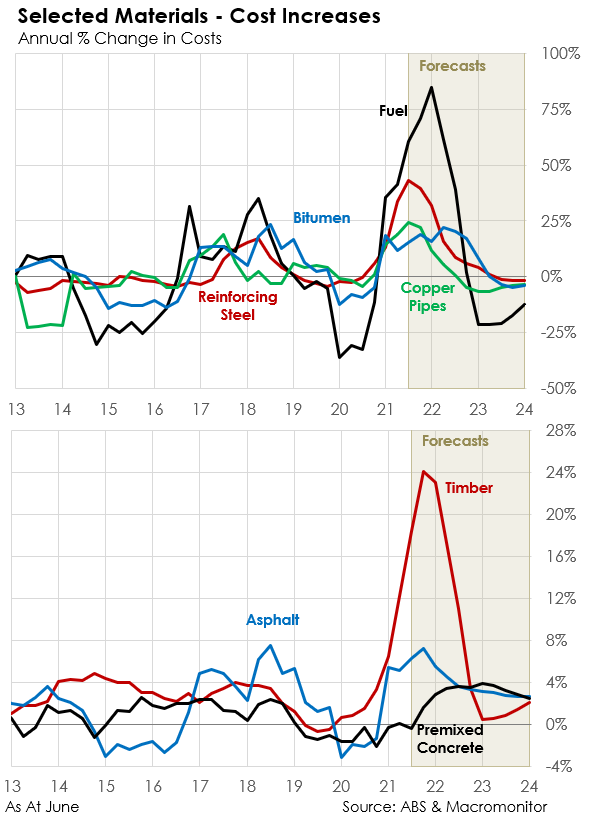
Macromonitor is currently finalising a new edition of our annual report on construction cost inflation, Australian Construction Cost Trends, The forecasts we are currently developing for this new report show that the surge in costs currently being experienced in Australia's construction industry will persist for the rest of calendar 2022. The peak is expected at different times during the year, depending on the sector and geographic region, but the rate of inflation is expected to return to more normal rates, for all sectors, in 2023.
|
Two key points to note however are:
|
- Overall construction costs will not decline following the current surge; rather, they will resume normal rates of inflation from the new, higher, base, and
- Some cost items, including wages, will be rising at a faster rate than their historical averages for quite some time, with the declines expected in other items, such as oil and metals, bringing down the overall rate of increase.
|

|
|
The rate of total cost inflation in building and construction is estimated to have been around 7% in calendar 2021, with around the same rate expected during 2022. This is the combined result of; a spike in commodity prices (impacting fuel, metal products and transportation costs), plus a particularly large rise in timber prices, and smaller, but possibly longer-lasting, increases in items such as wages, concrete and asphalt.
|
|
|
Following the high inflation period of 2021 and 2022, the increase in construction costs is expected to be below average in 2023, as the result of a downward correction in some prices. But from 2024 onwards, we expect cost inflation to return to its normal long-run average of 2% to 2.5% per year. We actually expect a slightly higher rate of cost inflation over the five years from 2024 than the historical average.
|
Looking at the underlying causes of the current surge in cost inflation, there are four main factors:
|
- A resumption of strong growth in construction activity in Australia (and elsewhere in the developed world), including a strong rise in industrial building work, as well as increases in housing, public sector social infrastructure, other non-residential building and transport infrastructure, which is pushing up demand for all inputs to construction,
- Rising commodity prices as a result of the rebound in the world economy following the negative impact of the pandemic,
- Supply constraints and rising shipping costs related to the effects of the pandemic and the policy responses, and
- The impact of the Ukraine conflict, particularly on prices of oil and steel.
Subsequently, the decline in cost inflation, from 2023, will be due to:
|
- The expected eventual downward correction in commodity prices, most notably steel and oil, as global supply begins to improve, and as the Ukraine situation is eventually resolved, or stabilises,
- A plateauing of construction activity growth, due mainly to the eventual downturn in residential and non-residential building, which will take pressure off the prices of construction inputs, and
- An increase in the supply of inputs and an improvement in shipping and other supply constraints, including the re-opening of borders which will improve the mobility and supply of labour.
|
|
For more detailed forecasts and analysis please subscribe our forthcoming report – Australian Construction Cost Trends. This report provides a cost indexes, by material type, labour, equipment and services, for each type of building and construction work.
|
|
|
|
|
Our most recent reports:
|
|
|
|
|
Australian Construction Cost Trends
|

|
|
This report examines the outlook for construction costs, in detail be sector and type of input.
|
|
|
|
|
|
|
|
Australian Construction Projects Database
|

|
|
This latest list of projects corresponds with our fully revised set of forecasts published in November 2023.
|
|
|
|
|
|
|
|
Australian Regional Construction Outlook
|

|
|
Our latest regional forecasts for residential building and construction have just been released.
|
|
|
|
|
|
|
|
Australian Construction Materials Forecasts
|

|
|
Our latest forecasts assess the implications for construction materials demand of the current outlook for building and construction.
|
|
|
|
|
|
|
|
Australian Road and Bridge Works
|

|
|
This report examines the strength and composition of the current upturn, and determines the likely timing of the peak, and subsequent decline.
|
|
|
|
|
|
|
|
|

