|
|
|

|
|
|
|
Transport Infrastructure Boom Set to Peak in the Coming Year
|
There remains a large mismatch between supply and demand in the transport sector, although improvements have been observed in the past year. The Infrastructure Australia Market Capacity Report has reduced its shortfall of public sector workers from 229,000 to 197,000.
|
|
Increased wage pressure from a chronic undersupply of labour, coupled with persistent materials cost inflation has caused cost blowouts on major projects to become standard. In response state governments have frozen funding, delayed or abandoned a number of projects to manage a rising debt burden.
|
|
|
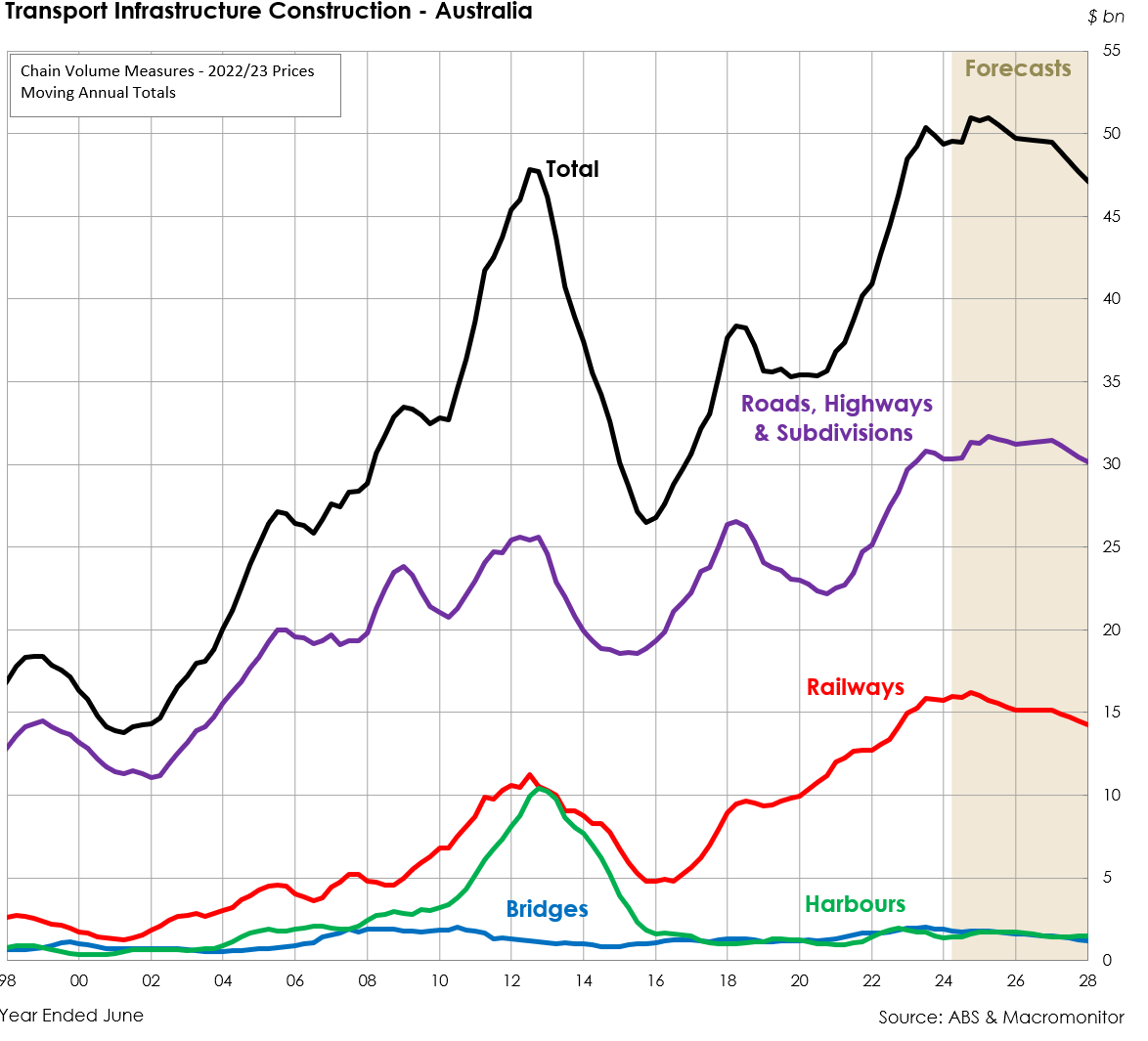
Transport infrastructure construction work done is set to peak in the coming year, as seen above, as a wave of major projects approach completion. We expect a downward trend to begin from 2025/26 as tightened state government budgets have limited the previously anticipated transport project pipeline.
|
|
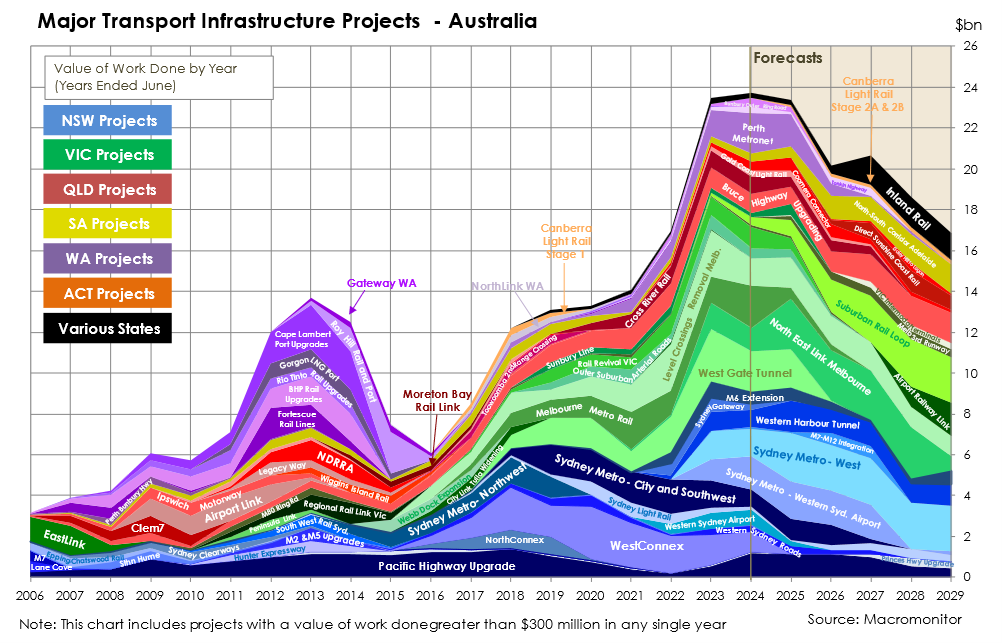
The chart below highlights how the peak has been reached when looking at expected spending on Australia's major infrastructure projects.
|
|
|
|
|
|
|
|
Our most recent reports:
|
|
|
|
|
Australian Construction Cost Trends
|

|
|
This report examines the outlook for construction costs, in detail be sector and type of input.
|
|
|
|
|
|
|
|
Australian Construction Projects Database
|

|
|
This latest list of projects corresponds with our fully revised set of forecasts published in November 2023.
|
|
|
|
|
|
|
|
Australian Regional Construction Outlook
|

|
|
Our latest regional forecasts for residential building and construction have just been released.
|
|
|
|
|
|
|
|
Australian Construction Materials Forecasts
|

|
|
Our latest forecasts assess the implications for construction materials demand of the current outlook for building and construction.
|
|
|
|
|
|
|
|
Australian Road and Bridge Works
|

|
|
This report examines the strength and composition of the current upturn, and determines the likely timing of the peak, and subsequent decline.
|
|
|
|
|
|
|
|


